Physical first!
I have, as of late, been trying to get rid of my dependence on services when it comes to consuming media. There will always be a need for certain streaming services, such as Netflix, since their content may never be released in physical formats.
My view is that any form of media - be it music, video games or movies and TV shows - should be physical first. Not only for the sake of preservation (because what are you going to do if Netflix makes a bad decision and goes bankrupt?) but also because if you're going to throw money at something, you might as well own the thing you paid for, right?
#Stopify
The absolutely easiest thing to move away from is Spotify. In fact, I've been trying to coin a boycott term - #Stopify - in order to spread the word of all the nastiness the company is up to.
Not only are they paying minimal compensation to artists, they're also allowing and even incentivising AI-generated content on their platform, which in sheer volume outperforms new human artists in terms of both releases and engagement.
And what does the company do with its subscription and advertising revenue instead of increasing (human) artist compensation? Besides providing substantial payouts to executives and investors, it has invested significant sums in controversial podcasting ventures, such as in the pseudo-science/lite-right/"just-asking-questions" show The Joe Rogan Experience, as well as in military AI drone technology.
The company has thus moved away from its core product. Rather than focusing solely on music streaming, Spotify is increasingly trying to become an all-in-one media platform by hosting not only podcasts and audiobooks but, most recently, video content as well.
So, if you're using Spotify for music, why are you paying for all of the above?
Instead of spending money on an ever-increasing monthly fee that supports practices you may disagree with, I suggest finding an alternative that focuses on music and fair artist compensation.
My preferred service is the French platform Qobuz.
Q as in Quality
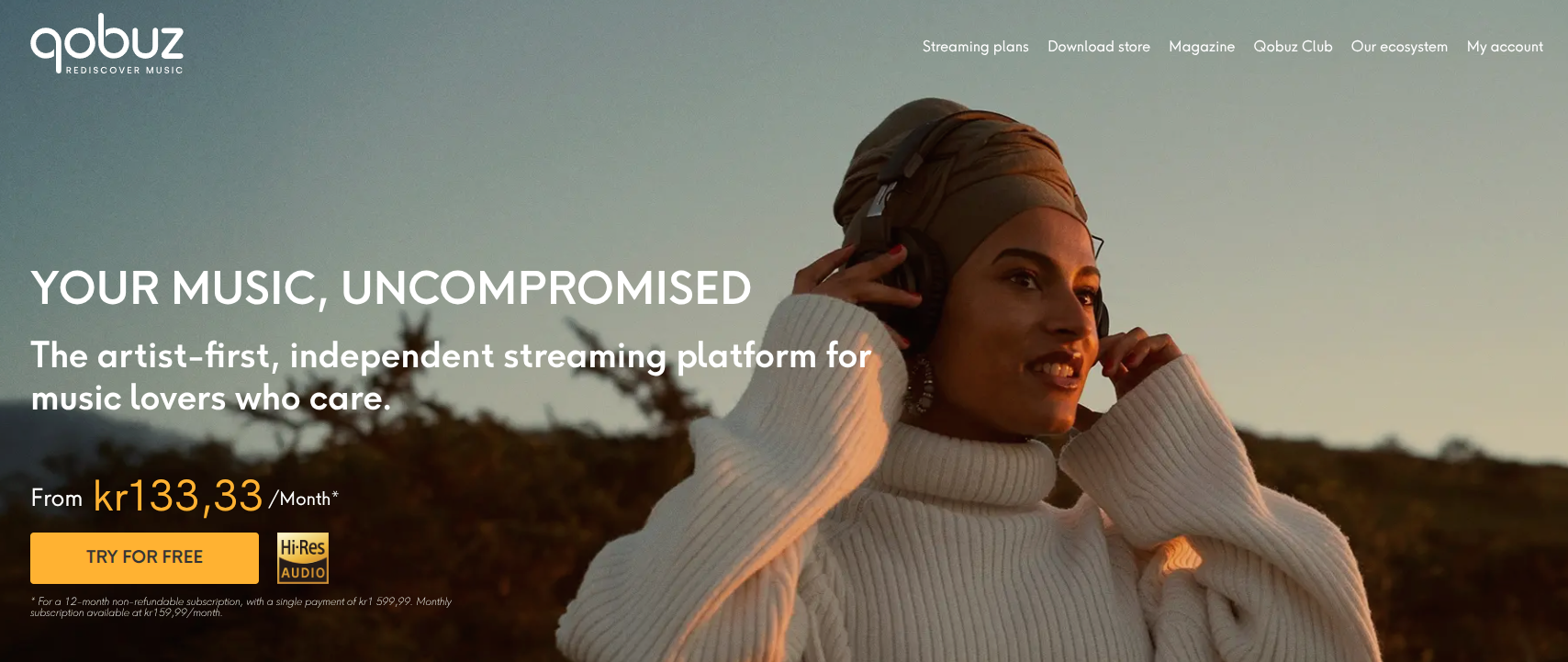
Why choose Qobuz? Instead of comparing it to other services, I'm going to outline its pros and cons on its own terms.
First, the streaming uses lossless FLAC. This means that, compared to CD quality, you're getting effectively the same audio fidelity. A higher subscription tier is not required, as it is included by default. If you enjoy off-grid consumption of digital media, you can cache your music for offline playback to your heart's content, with storage limits being the only constraint.
You can also purchase music at reasonable prices, available in formats such as WAV, FLAC, MP3 and DSD. All of it is DRM-free, meaning it is yours to keep forever on whatever storage you'd like.
Another aspect I appreciate is the minimal reliance on algorithmic recommendation systems. Instead of depending primarily on engagement metrics, Qobuz employs human curation for genre-based recommendations. It also offers an online magazine with reviews, interviews and articles. Together, this results in recommendations that feel less hyper-influenced or artificial and more grounded.
If I were to compare, I'd say that Spotify resembles a hip radio station filled with ads that tries to shove whatever the latest record label-driven trend is down your throat, while Qobuz feels more like a small, well-curated music shop staffed by knowledgeable employees that shares your love for music.
The only two potential downsides I can think of with Qobuz are pricing and catalogue availability. While most major artists do make their way onto Qobuz, releases are not always available on day one. In most cases they are, but not consistently. This is especially true for smaller artists and bands, particularly those using distributors that may not deliver to the platform at all.
As mentioned, the price may also deter some newcomers. At the time of writing a monthly subscription costs around 17 USD per month (or roughly 14 USD per month with annual billing). This can seem steep, but remember that Qobuz reportedly pays significantly more to artists than Spotify (up to four times more, actually.) As a result, a larger portion of your subscription is more directly directed toward artist compensation.
Thrift, rip and stream!
If you want a cheaper alternative though, you can always visit thrift stores and pick up albums for a dollar or two. "But I don't have a CD player," I hear you cry. If your PC has an optical drive - or if you can pick one up at the same thrift store - you can rip your music effortlessly and store it as FLAC, MP3, or any other format you prefer.
Of course, this isn't as convenient as being able to stream your music from anywhere. This is where self-hosting a media server comes in.
In our household, we've been using Plex for the past 15 years - with Plexamp being my favorite music player of all time. Unfortunately, it's not something I can wholeheartedly recommend today. The company has increasingly shifted toward monetisation, and the price of a lifetime Plex Pass has risen dramatically over the years.
I'm all for purchasing software outright instead of paying subscriptions, but paying hundreds of dollars simply to access features for consuming my own media feels difficult to justify and especially as a recommendation for others.
If I weren't already a lifetime Plex Pass holder, I would probably choose Jellyfin instead. It's free, open source and continues to improve with every release.
Some day I'll write an article detailing how I manage my media collection, from ripping and organisation to streaming and backup. But not today. Just know that there are alternatives out there.
Physically - digitally!
When I listen to music, I usually do so with gusto. I love pulling a record off the shelf, placing it on the turntable, and simply sitting back in my chair to listen. Sometimes I'll read at the same time.
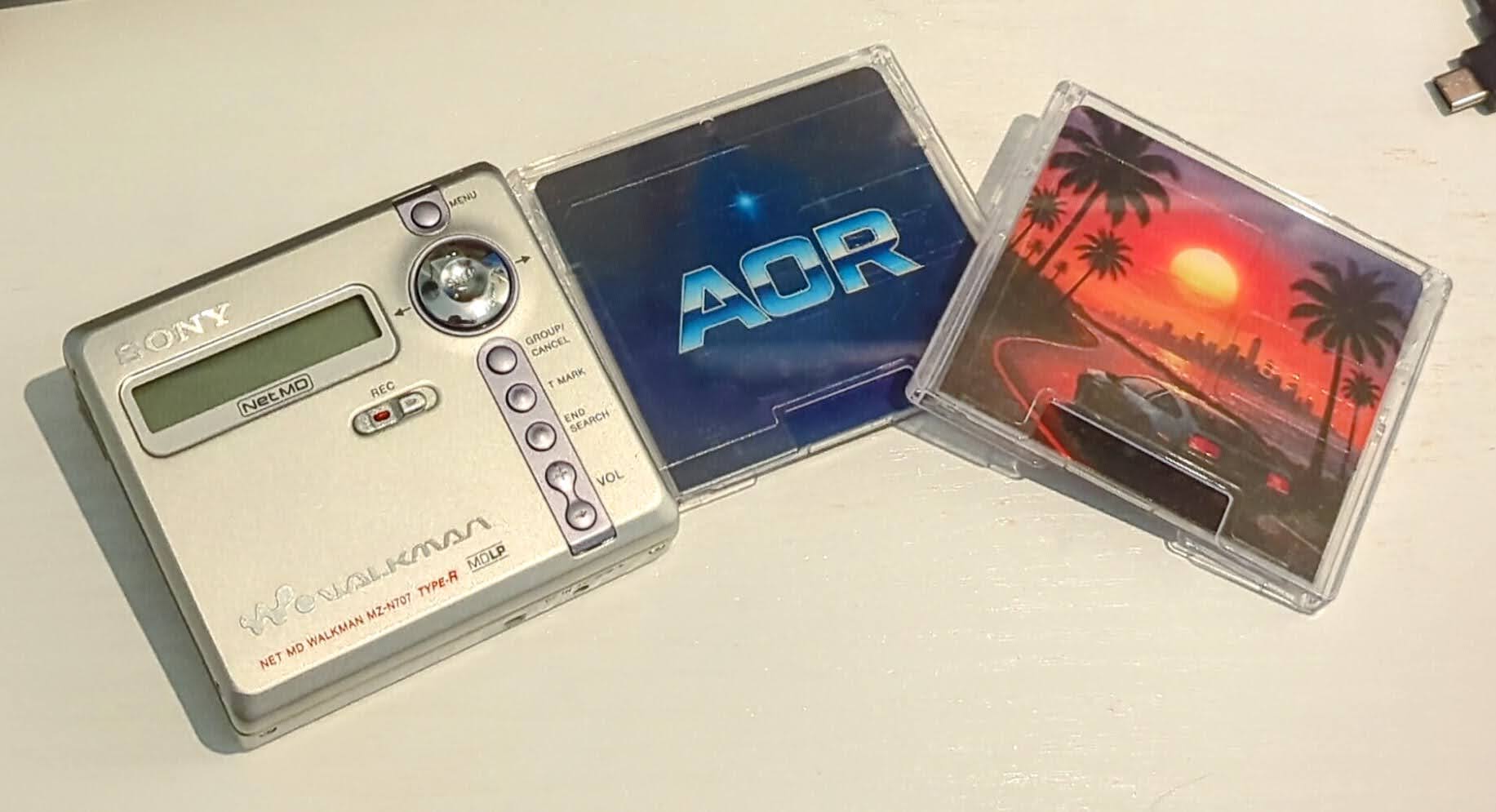
For music on the go, however, I prefer to bring my MiniDisc player. The player in question is a NetMD Walkman MZ-N707, which I managed to pick up cheaply on eBay. This particular model features a USB interface and can transfer audio encoded in ATRAC format - Sony's answer to MP3 and other compressed audio formats at the time. With NetMD, you don't have to sit around and wait for the tracks to be recorded onto the disc (well, you do, but not in realtime), as the music is stored as files rather than audio. The audio files are then transferred from disc onto an onboard memory before decoded and enjoyed through a snazzy pair of corded headphones.
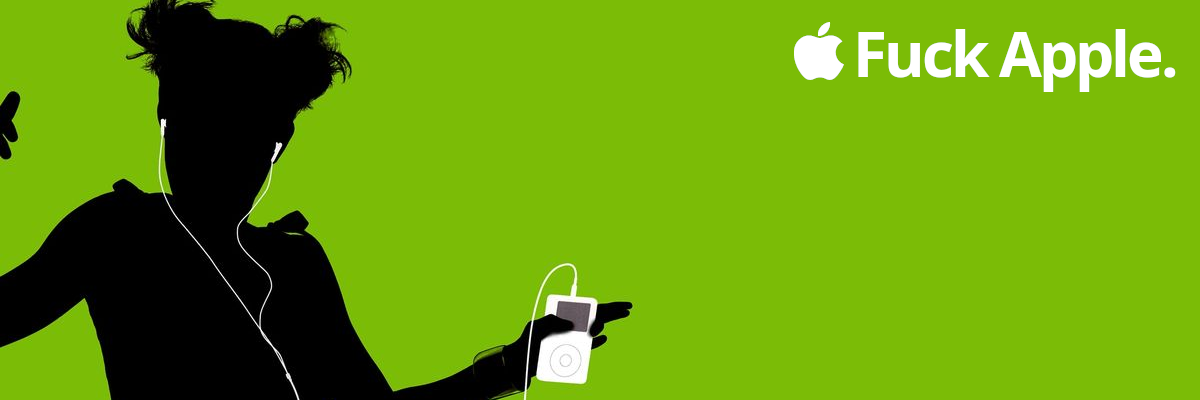
Fuck AirPods. Fuck Apple.
To manage my discs, I use a web application called Web MiniDisc Pro, available through the MiniDisc Wiki site. The application requires a Chromium-based browser (for WebUSB functionality) and can convert almost any audio file into ATRAC using various quality presets. This allows you to fit as much music as possible onto a disc without sacrificing too much audio quality.
Using this setup, I create themed playlists such as "Retrowave Night Driving" or "Ultimate Adult-Oriented Rock", each stored on its own disc. Through the MiniDisc Wiki, I also discovered this store called Minidisc Today that provides custom UV prints on secondhand discs, resulting in some genuinely fantastic-looking products.
Perhaps that's why I enjoy physical media so much, and music in particular.
Whether I'm pulling a record from the shelf, prepping a MiniDisc "mixtape" before a long walk or a tedious chore, or organising my music library on a server at home, I'm interacting with something I actually own. No subscriptions. No recommendations fighting for my attention. No monthly fee determining whether I can access the collection I've spent the past decade building.
In a world increasingly built around renting access instead of owning things, that alone feels worth preserving.
This music is mine.
